
The decision that shaped it
Send audio out instead of building a player
My listening habit lived in my podcast app, so each article becomes an episode in a private feed. No new player to learn and nothing to remember to come back to. The cost is that once audio leaves the app, it has to stand on its own.
Where it stands
- Live now
- The site is still up at speasy.app, but it no longer processes new content. At its peak it ran end to end with minimal intervention.
- Tested
- With my own listening first, then with early users invited through LinkedIn. Each round cut effort instead of adding features.
- Not yet proven
- How far paid subscriptions grew, and how long people kept listening.
The problem
Read-later apps, bookmarks and folders named Important or Weekend all assume the same thing: that one day you’ll sit down at a screen and read. For me that day rarely came, and the list kept growing.
The content wasn’t the problem, and neither was discipline. It was format. Reading competes with work, family and energy. Listening fits around them, and I already listened every day while walking, commuting and doing chores.
The full build breakdownThe opportunity · What I built · Key decisions · How it works · How I verified it · Results · What I’d change
The opportunity
Read-later tools compete on control: more sources, more tags, more queues to manage. I thought the real competitor was effort. Every saved article is a small promise, and the backlog is where those promises go to expire.
So the bet was a product that asks for almost nothing. The listening habit already exists, and podcast apps already handle playback, progress and sync. If Speasy could put good audio into that habit, people wouldn’t need to change anything to use it.
What I built
The first version took an article link, pulled out the text, turned it into speech and synced it to my podcast app as a private feed. It was rough and slow. It still changed what I did: I stopped saving links and started listening.
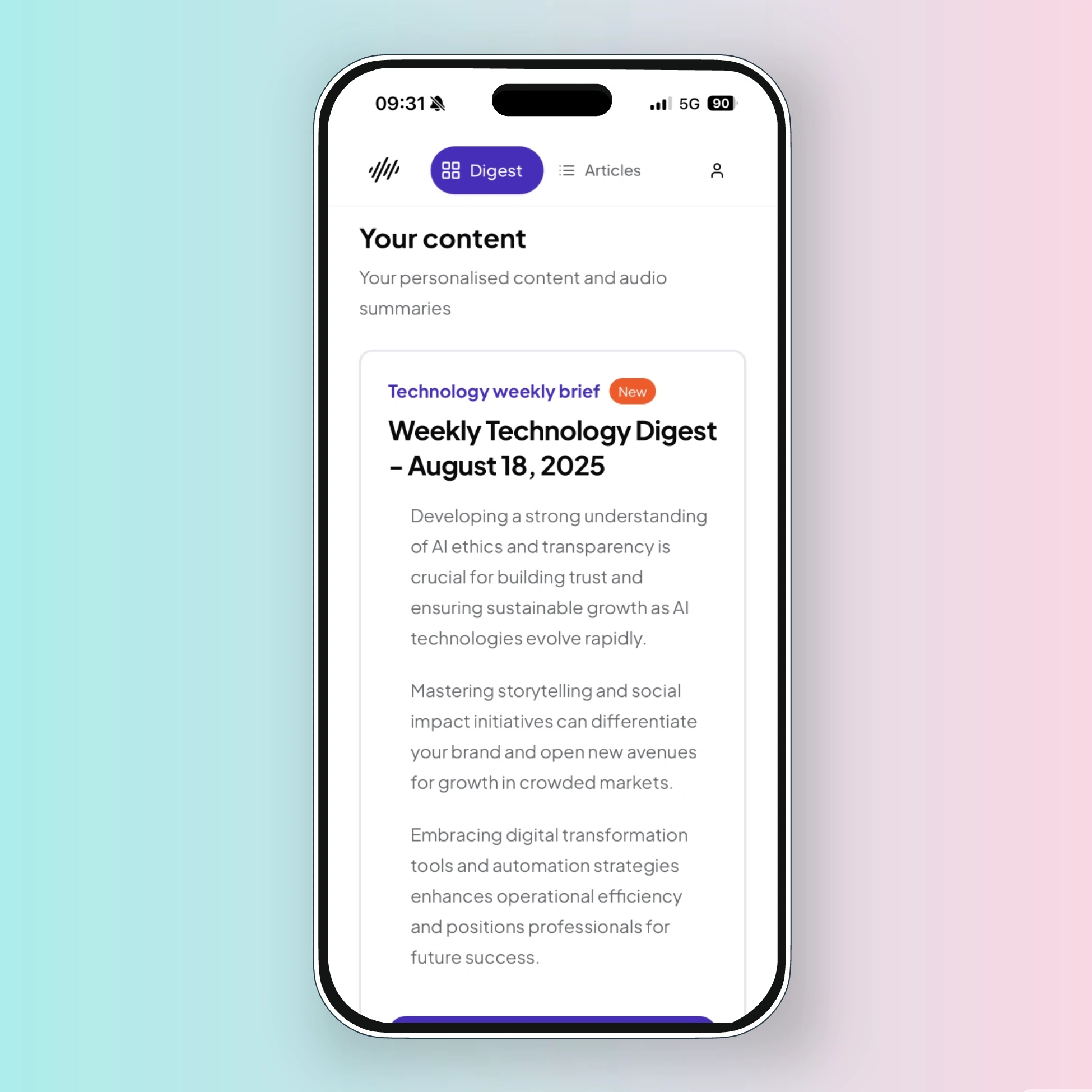
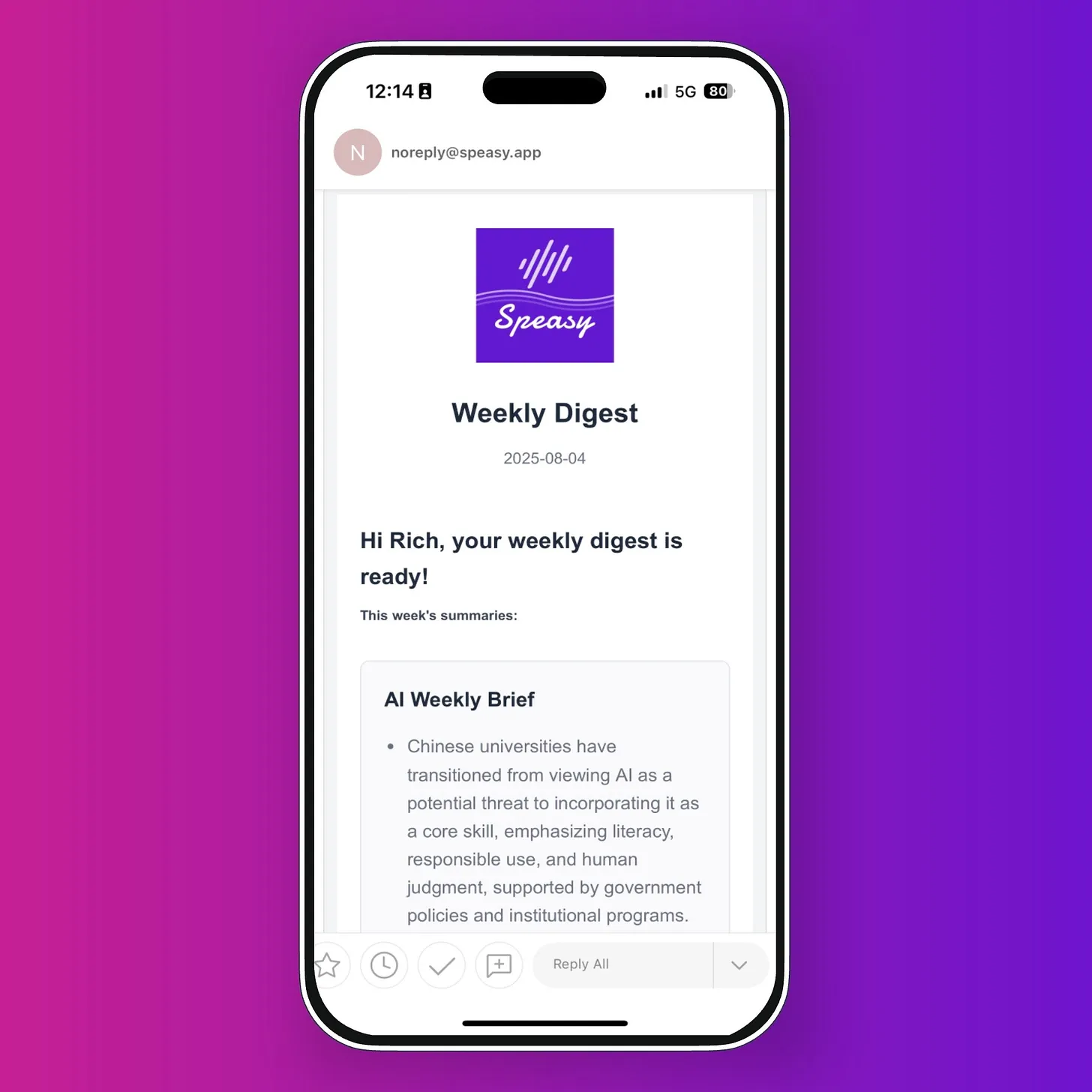
Once it proved useful I rebuilt it as a proper web app. Speasy now takes in newsletters and articles, summarises them into scripts written to be heard, and assembles a weekly digest by category. The audio lands in a private podcast feed, with a dashboard and a digest email alongside.
Key decisions
Do less, not more
The obvious roadmap was queues, folders, tags and playback settings. Every competitor had them. I went the other way. Speasy picks good sources, processes them automatically and delivers a regular digest, so the user has nothing to feed.
Decide what Speasy refuses to read
Plenty of pages look like articles but carry navigation, promos, comments and paywalls. Early versions read all of it, and it sounded clumsy. Speasy now strips pages hard and rejects ones below a quality bar. A bad episode loses trust faster than a polite no.
A queue that doesn’t rush you
I tried progress tracking, suggestions and nudges. They added weight. Now finished items move on, unfinished ones wait, and nothing asks for attention.
Let people hear it before signing up
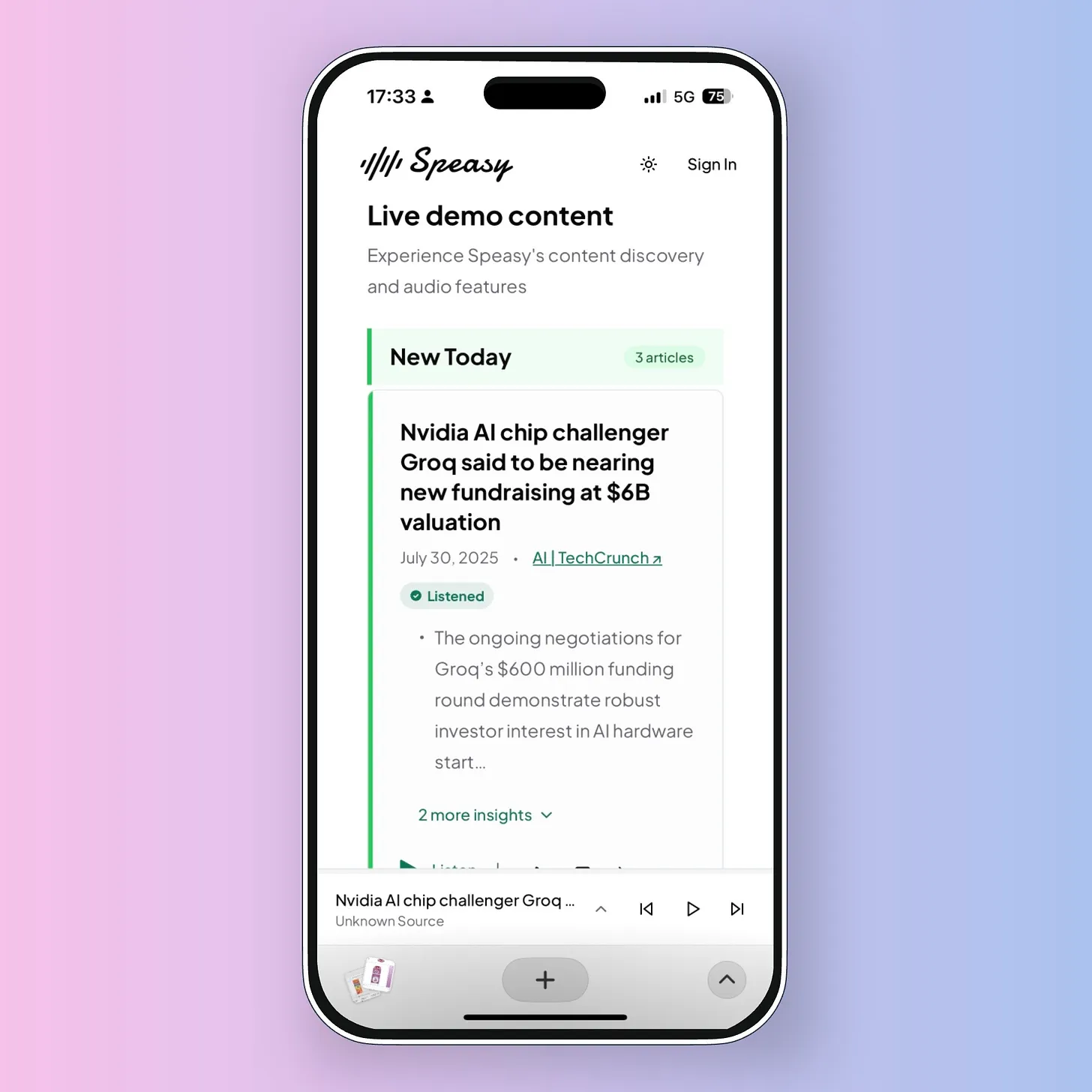
A demo mode plays real content to visitors before they create an account, which took signup friction out of the first visit.
How it works
Five automated steps, with no manual work between them. Sources come in. A model summarises each one into a script. Text to speech turns the script into audio. Episodes are grouped into a weekly digest by category. Each subscriber’s private feed picks them up.
I built it alone, using AI tools for the parts I couldn’t do quickly myself. Replit hosted the first prototype, v0 drafted the initial UI, Cursor helped me debug and refactor, and Devin ran coding tasks in the background. Supabase is the backend and database, OpenAI parses and summarises content, ElevenLabs produces the voices and Stripe takes payments.
How I verified it
The first test was my own behaviour. The weekend hack shrank my backlog before I’d decided anything, because it finally fitted into my day. Living with it taught me I listened more walking than sitting, and short pieces worked better than long ones.
Then I invited early users through LinkedIn and shared working versions openly. Their feedback was consistent. They preferred condensed audio to full reads, cared more about predictability than control, and found podcast delivery familiar. Friends who tried it didn’t ask for features. They asked when it would be available again.
Each round of changes cut effort rather than adding features: better summaries, clearer structure and the demo mode.
Results
Speasy reached paid subscriptions three months after the first idea. From then it ran end to end with minimal intervention: content flowed in, got processed and arrived as audio without anyone managing it. The site is still online, but it no longer processes new content.
What I’d change
The lesson I took from Speasy: if people already feel behind, each control you add is a cost. Ship early, watch what people do rather than what they say, and keep cutting.
Try it
The case study tells the longer story. The building-in-public post goes deeper on three design decisions.
Visit the Speasy sitespeasy.app