A backlog of good intentions
Speasy started as a personal problem, not a business idea.
Like many people who care about learning, I saved far more articles and newsletters than I could read. The list kept growing. The intent was good; the reality was constant backlog and quiet guilt.
At the same time, I listened to podcasts every day. Walking, commuting, doing chores. Audio worked where reading did not. That contrast raised a simple question: why did learning still depend so heavily on screens?
The weekend hack that changed my behaviour
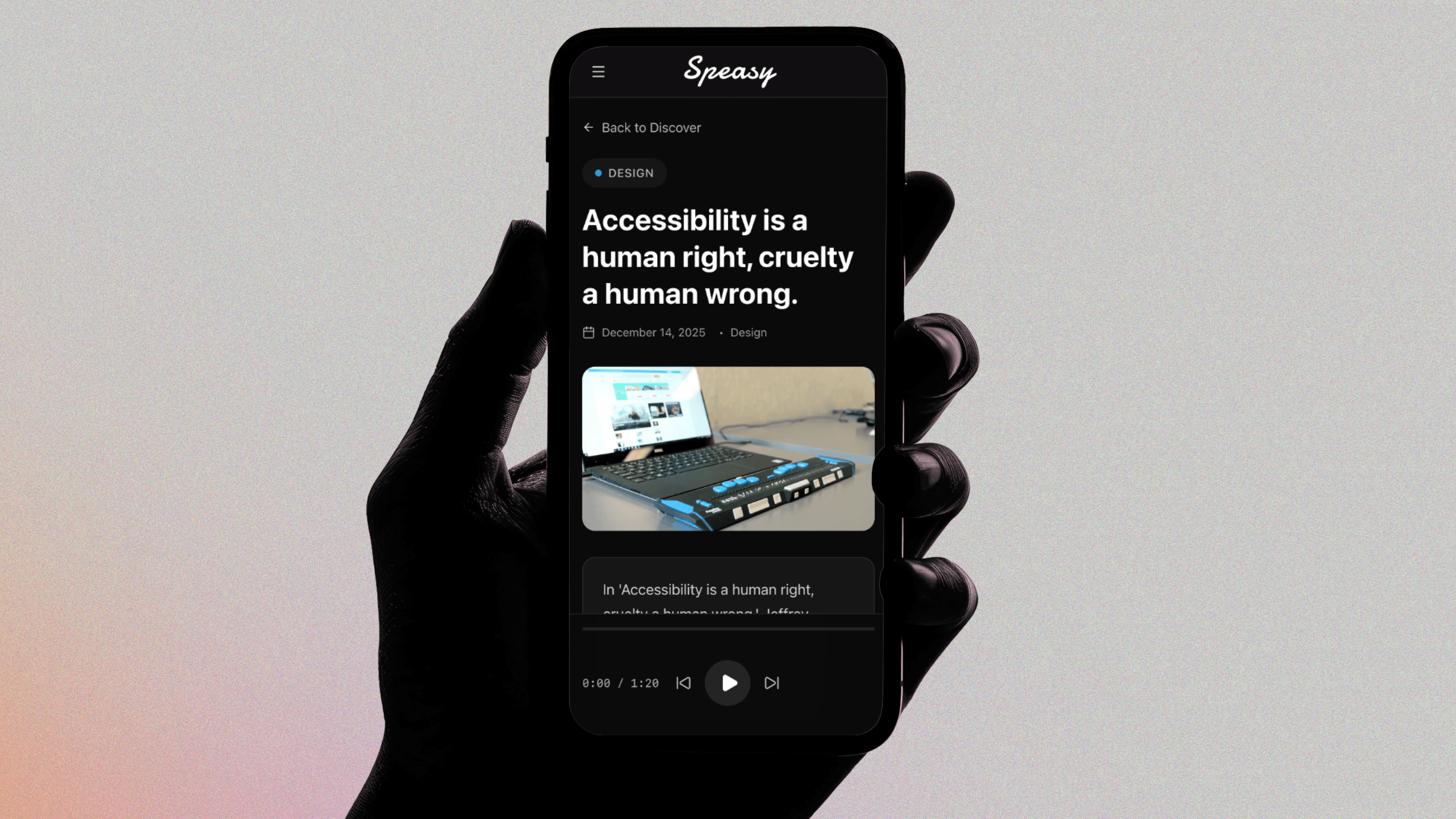
The first version of Speasy was a weekend experiment. A small web interface took an article URL, extracted the text, converted it to speech, and synced the result to my podcast app as a private feed.
It was rough, unreliable, and slow. But it worked well enough to change my own behaviour. I stopped saving links and started listening instead.
That was the first real signal. Not a survey, not a landing page test — my own habits shifting without me deciding to shift them.
The call that shaped everything: do less
The tempting roadmap was obvious: queues, folders, tags, playback settings. Every competitor had them.
But that roadmap adds work to something people already feel behind on. The problem was never conversion speed or audio quality. It was effort. So I made the call that shaped the rest of the product: Speasy should do less, not more.
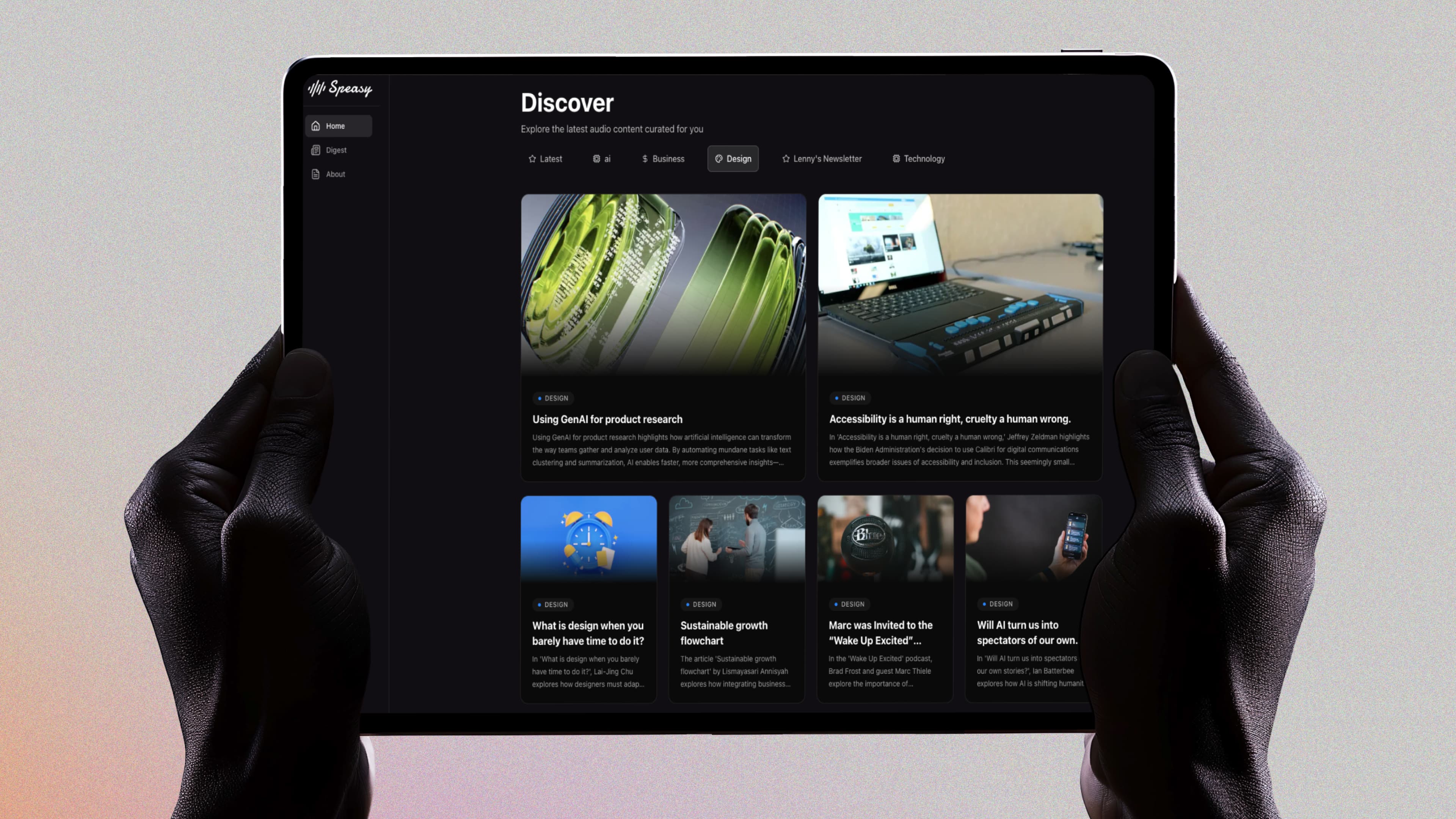
Instead of asking users to feed the system, I flipped the model. Speasy selects high-quality sources, processes them automatically, and delivers a regular audio digest. Less choice, far less friction.
At that point Speasy stopped being a utility and started becoming a format.
From source to audio, no manual steps
As the idea proved useful, I rebuilt the product properly — a structured web app with reliability and end-to-end automation at its core.
The system ingests newsletters and articles, summarises them into clear listenable scripts, converts the scripts to natural speech, assembles weekly category-based digests, and delivers everything through private podcast feeds.
The goal was one sentence: from source to audio, without manual steps. Every step a user has to perform is a step where the backlog starts again.
What early users confirmed
I invited early users through LinkedIn and shared working versions openly. The feedback was consistent:
- people preferred condensed audio over full reads
- predictability mattered more than control
- podcast delivery felt familiar and low effort
Each round of changes — better summarisation, clearer structure, a demo mode that removed signup friction — reduced cognitive load rather than adding features. The users were telling me the same thing the weekend hack had: they did not want a tool to operate. They wanted a result to receive.
Where it landed
Today, Speasy runs end-to-end with minimal intervention. Content flows in, gets processed, and arrives as audio without the user managing anything.
The practical lesson travels beyond audio apps. If your users already feel behind, every control you add is a cost, not a gift. Ship early, watch behaviour rather than opinions, and cut back relentlessly.