
Why this exists
The tools I used to stay organised kept asking me to add more. More lists. More goals. More tracking. They treated stopping as something that happened when you ran out of energy, not something you chose.
I wanted a product that helped me stop on purpose.
The tension
Most task tools compete on momentum. They reward streaks, progress, and staying active. They assume more effort is always better.
But stopping is not failure. It is a decision and it is a hard one. Enough is built around a different belief: stopping is a skill. And skills need structure, not motivation.
The belief
Most tools add thinking at the exact moment you need less of it. They present choices, options, and future plans when what you really need is a clear line.
A good tool should lower the load. It should help you make one clear decision, then get out of the way.
What enough is
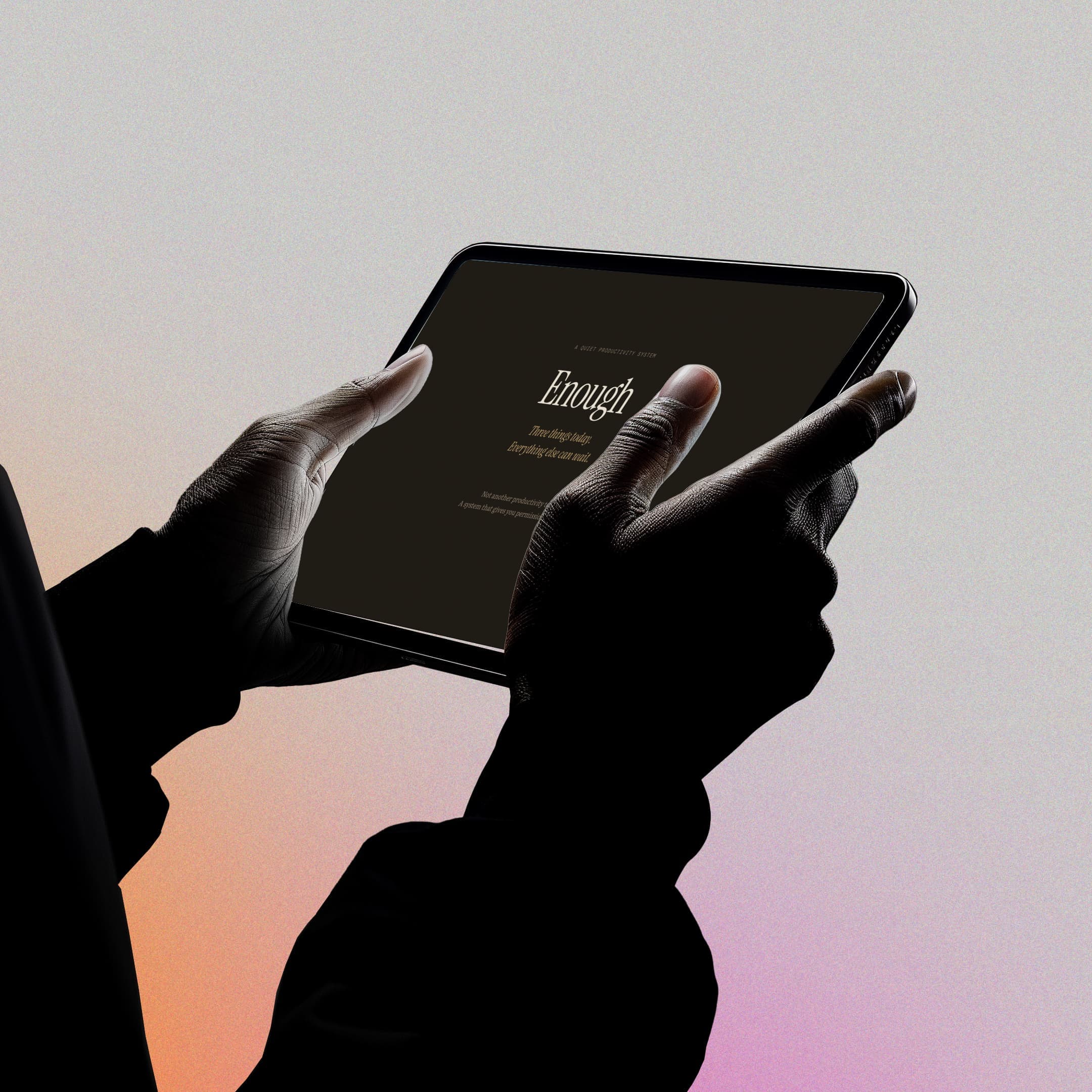
Enough is a small, opinionated product that helps you decide when today is done.
It gives you:
- Three tasks only
- A clear end
- A deliberate close
Enough does not try to help you do more. It competes with the feeling that you should still be working.
Three tasks. One close ritual. The feeling that today was enough.
The core opinion: a hard limit
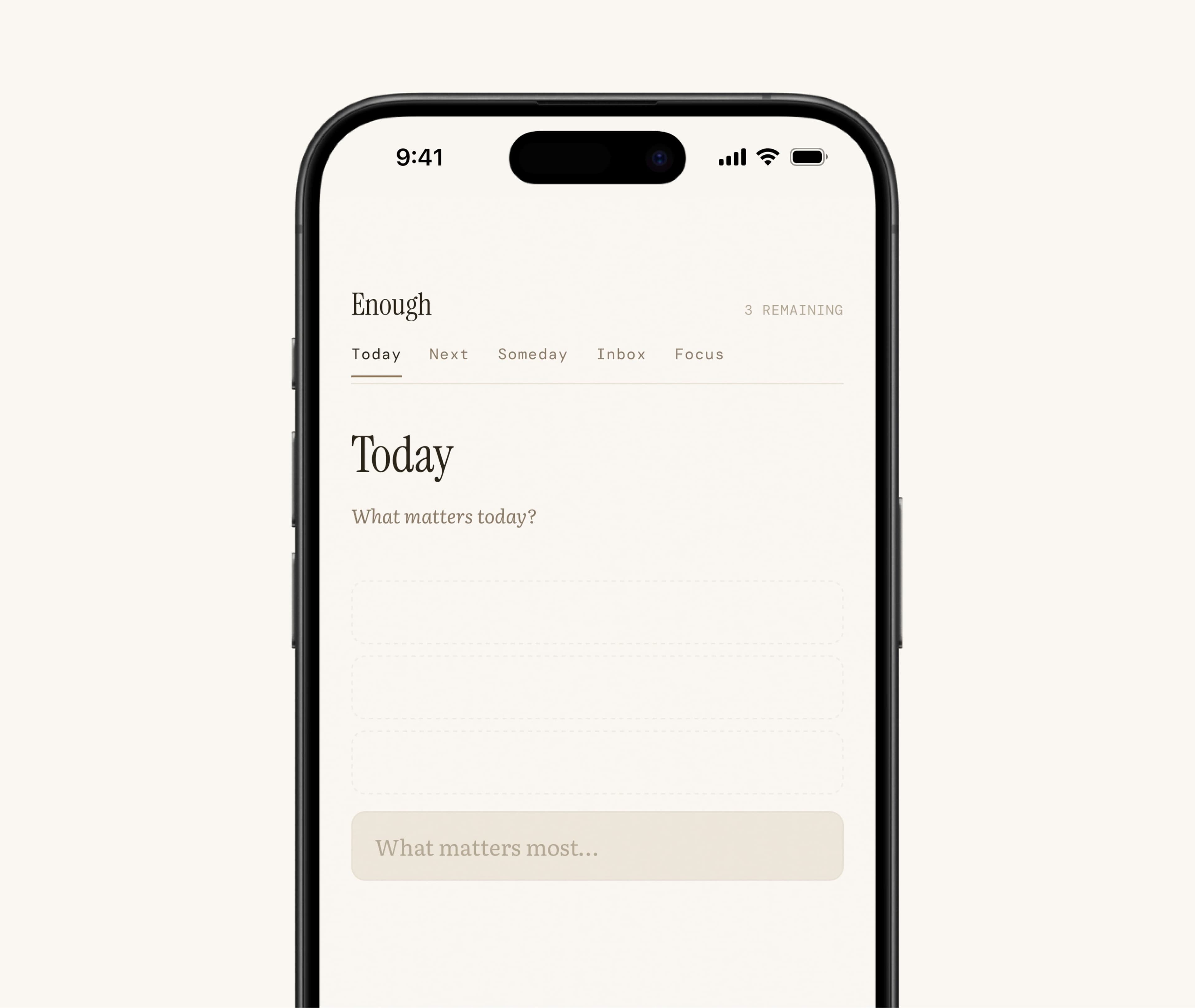
The most important decision in Enough is the three-item rule. There is no way to add a fourth task. No overflow. No “just this once.” When the three slots are filled, the add action disappears.
This is not a constraint for simplicity’s sake. It forces a choice: what actually matters today? The product does not trust willpower. It trusts boundaries.
Screen call-out: the main surface
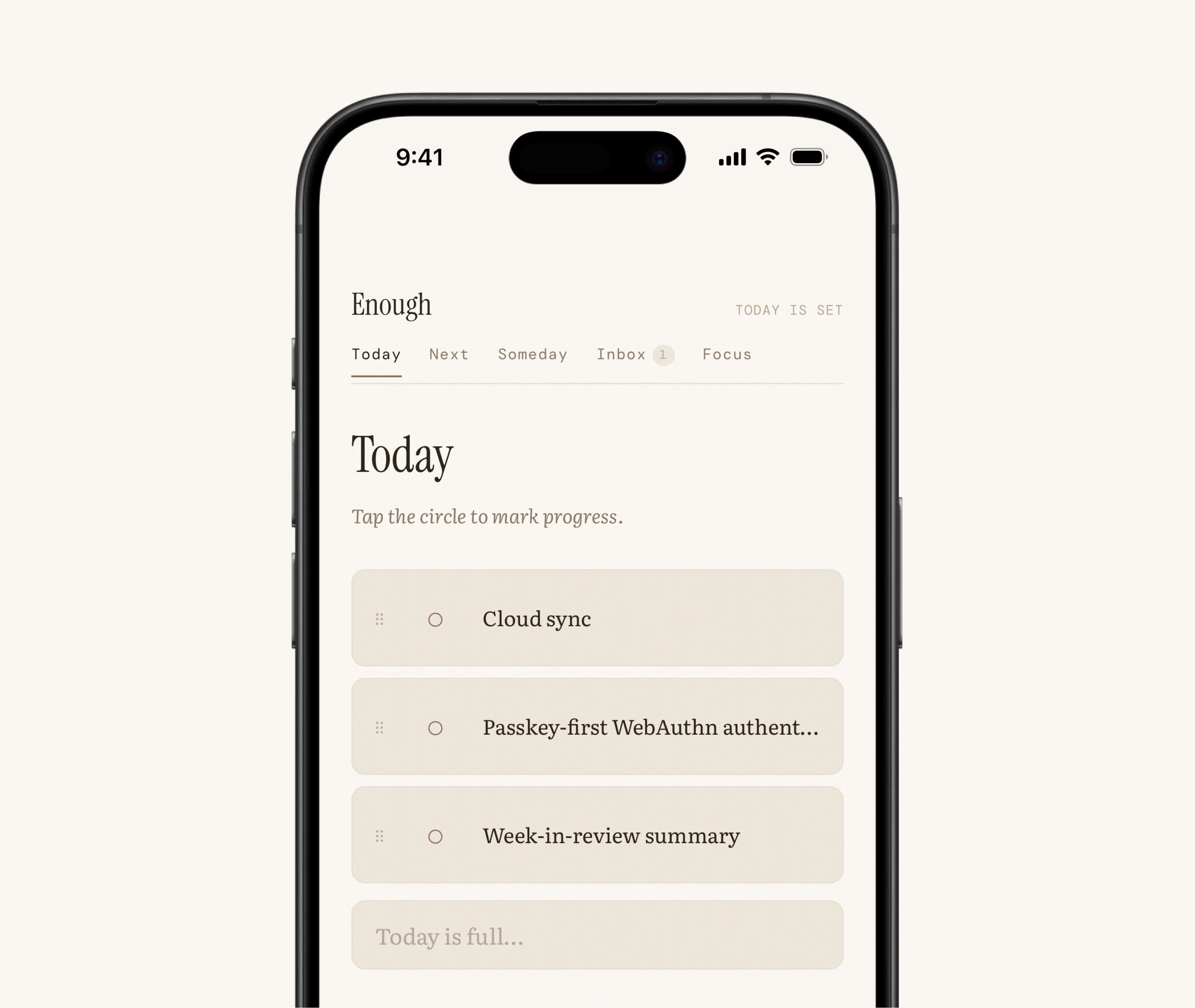
A warm, parchment-toned surface with three task cards. Each card has soft edges and a gentle shadow. When all three are filled, the add button suggests the new task should be deferred till tomorrow or someday.
The screen is not calm because it is empty. It is calm because it refuses to grow.
Parking, not deleting
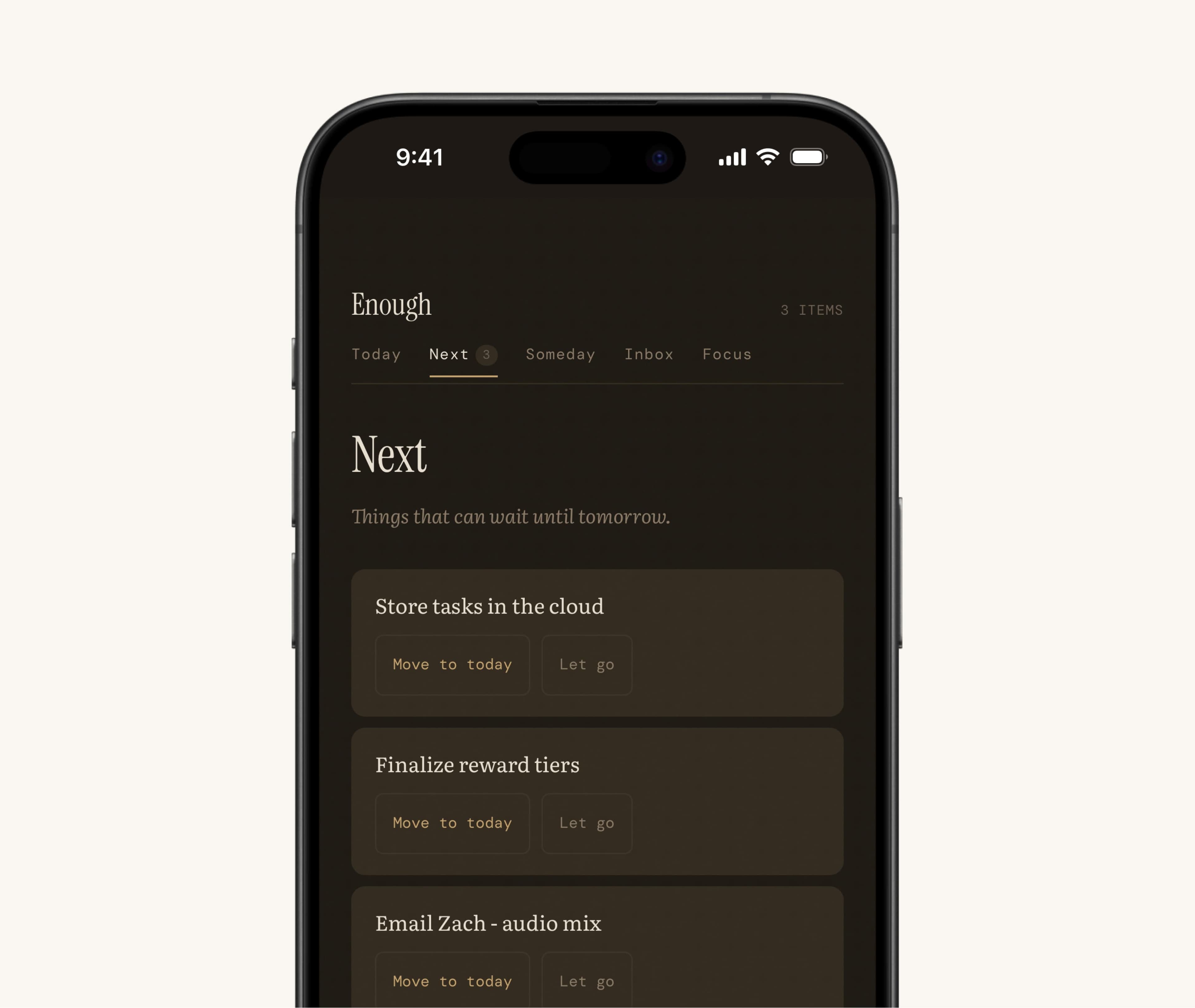
Enough assumes unfinished work is normal. Instead of deleting tasks, you park them. Parking acknowledges the work without carrying it forward. Nothing is lost, but nothing lingers.
Parked items move out of today and into quieter places — Next or Someday — where they can wait without asking for attention.
The close ritual
The close is the centre of the product. At the end of the day, you close Enough. Not archive. Not reset. Close.
The interface shifts to an evening palette. The tone slows. You are shown a simple confirmation:
Nothing was forgotten.
This moment matters. It marks the day as complete, not perfect, just finished.
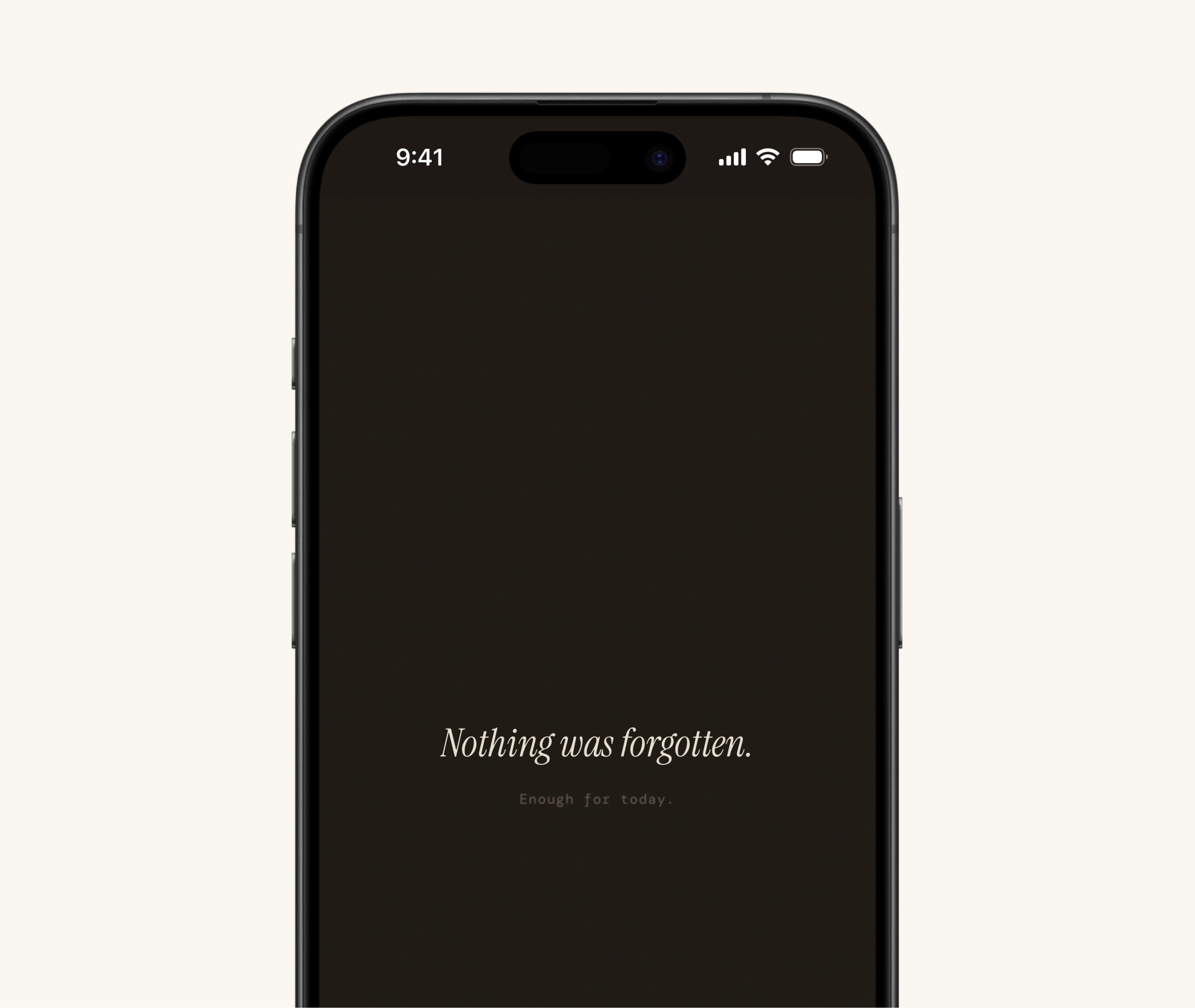
Screen call-out: the close state
The colour temperature drops. Text becomes softer. The interface stops inviting action. There are no next steps.
The product is saying: you can rest now.
Design goals
These rules guided every decision:
- Reduce thinking, especially at the end of the day
- Prefer removal over configuration
- Never reward busyness
If a feature made the product feel clever, it did not stay.
What I chose not to build
I did not add:
- Streaks
- Scores
- Progress charts
- Weekly reviews
- Reminders
These features turn attention towards performance and away from presence. Enough is not about improvement. It is about closure.
Craft as trust
Enough needed to feel warm, not sharp. The type is soft and readable. The colours shift with the day. Spacing is generous. Nothing is urgent.
The visual care is not decoration. It is how the product earns trust. A tool this opinionated has to feel safe to rely on.
What I learned
Limits are kinder than motivation. Removing features takes more confidence than adding them. Personal products need strong views, not broad appeal.
Enough reminded me that design is not always about helping people go faster. Sometimes it is about helping them stop without guilt.
Who this is for
Enough is for people who carry more than they need to and want a system that helps them set it down.
Not forever. Just enough for today.
About the author
Richard Simms is Principal Product Designer at SEEK, where he leads design for the Career Discovery Agent and Career Feed. He also builds Sentiuma, a personal AI knowledge infrastructure layer.