A conversation worth keeping
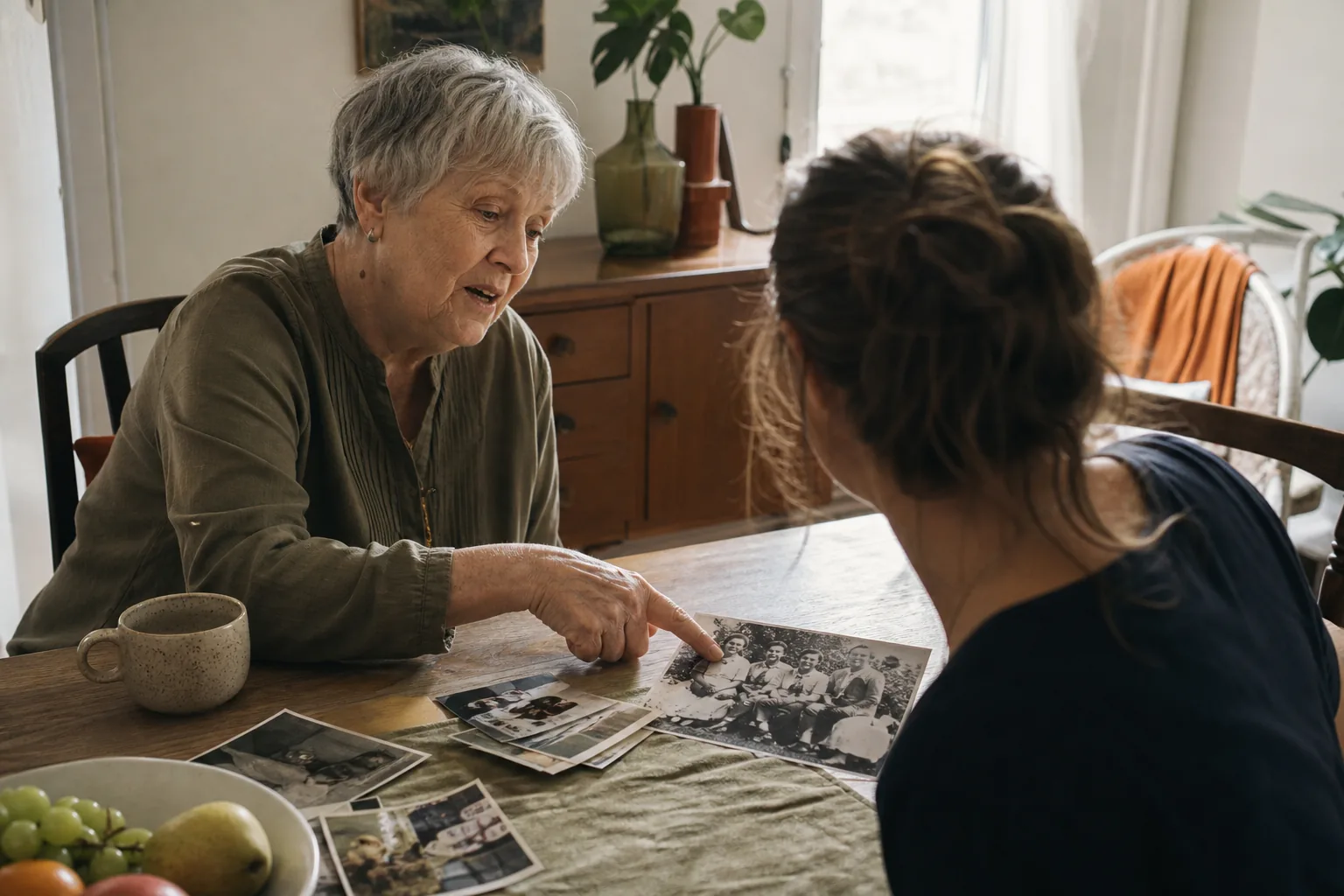
A blank page asks someone to become a writer. A list of questions asks them to organise a lifetime. I wanted Tellby to offer a smaller beginning: talk about something you remember, and let a thoughtful follow-up help you carry on.
The value for a family is in what survives the conversation. The storyteller’s own voice remains alongside the transcript. Memory cards give the organiser a way to review and collect what was captured before sharing it.
That makes the product about both the moment of telling and the years after it. A useful session should feel comfortable now and leave something a family can return to later.
The dress I made for the Camperdown dance
Betty sewed her own dress the week before the 1962 Camperdown dance, working at night so no one would see. She wore it with her sister’s good shoes, a size too small. Tom asked her to dance twice — she said yes both times.
“I didn’t tell my mother — she’d have said it was too much fabric for one girl.”
- People
- TomBetty
- Places
- ColacCamperdown hall
- Their voice kept beside the words, not replaced by them.
- Three plain sentences written for family, not a transcript dump.
- One line verbatim, with a way back to where it was said.
The story and voice are Tellby’s scripted sample, not a real family’s recording.
Two people, two different jobs
The person who wants to preserve a parent’s stories may be the one setting everything up. The person telling them needs a different experience. I separated those roles: an organiser who helps make it happen, and a storyteller who can concentrate on remembering.
That distinction shapes the whole journey. Setting up and reviewing belong with the organiser. Starting a conversation needs to be clear and inviting for the storyteller. Sharing comes after review, rather than happening automatically when a recording ends.
A family product needs to work across that relationship. Making recording effortless would mean little if someone felt unsure about who could hear it afterwards.
Organiser · on their phone
TellbySetup
Setting up for Nan
Start with
Please don’t ask about
Dad’s illness
Left out of every conversation, every time.
Sets things up, reviews what was kept, decides who sees it.
Storyteller · on a tablet
Hello, Nan.

Your organiser is getting things ready.
Opens a link and talks. Nothing else to manage.
Designing the next question
I design the conversation around attention. A follow-up should connect to what the person actually said, ask one thing and leave room for the answer. It should let a story take an unexpected direction.
If someone mentions growing potatoes with their father, a question about that shared routine can open a memory. Jumping immediately to the next life milestone would lose the detail they have just offered. This is an illustrative example of the behaviour I’m designing for.
The same care applies when someone hesitates or declines a topic. Remembering takes time. Some subjects should be left alone. The companion needs to make those boundaries feel ordinary and easy to express.
Live captions
NanDad and I grew potatoes behind the shed. Every Saturday, rain or shine.
TellbyEvery Saturday, rain or shine. What was a morning out there with your dad like?
- Does: Picks up the detail she just offered
- Does: Asks one thing
- Does: Leaves room for a long answer
Authored to show the behaviour I design for. Not a recorded session or model output.
Voice is part of the memory
A transcript can preserve what someone said. Audio also keeps how they said it: the accent, the pause, the affection in a name. Those are part of why a family might want to hear the story again.
Voice changes the design work too. Turn-taking, response timing and interruption become part of the interface. A response can read beautifully and still arrive too soon. I need to listen to the exchange as well as read it.
The companion’s character is another part of that exploration. I’ve been developing a soft book with restrained movement: a quick acknowledgement when someone begins, then a quieter rhythm while it listens. Responsiveness and patience need different timing.
The existing listening example and evaluation case study let you hear that design problem and explore how I examine it in more detail.
Nan…and the hall smelled of floor polish.
Quick nod, then a 4-second breath
A small acknowledgement when she begins, then a slow rise patient enough to sit with a pause.
The book and its motion come from Tellby’s session screen. The captions are written for this page.
Care as a product decision
I don’t want preserving family stories to become another obligation. Tellby’s principles include no nagging and no streaks. An invitation to return should respect the person’s time and willingness.
Privacy is part of that care. Memory cards remain private until the organiser approves them for sharing, with that boundary enforced in the database. The original recording also gives the family a way back to what was actually said.
These decisions connect the product’s values to its behaviour. Warm colours or an appealing character can help someone feel welcome. Control over what is kept and shared gives that welcome substance.
The dress I made for the Camperdown dance
Betty sewed her own dress the week before the 1962 Camperdown dance…
Ask next time
What did Tom say when he asked you to dance?
Who can open it
- YouOrganiserReviewing
- RuthNan’s daughterCan’t see it
- SamGrandsonCan’t see it
- Aunty JoNan’s sisterCan’t see it
Kept private. Family listeners cannot read or hear this story.
In Tellby this boundary is enforced by the database’s row-level security, not by the screen. Names here are invented.
From intention to working product
My process moves between the family’s need, the conversation and the working experience. I shape the roles and journey, prototype the voice interaction, then work through the details that change how it feels: the next question, a pause, a listening state or a review step.
Building the product lets me work through those decisions in their real context. Conversation design, interface design and implementation affect one another. An interaction can look settled in a screen and still need rethinking once someone has to speak to it.
The evaluation tools grew from that same responsibility. I wanted a way to inspect whether the companion stayed with the story and whether generated writing kept faith with its source. That is the linked case study: how I check the quality of the experience I’m trying to create.
What this work demonstrates
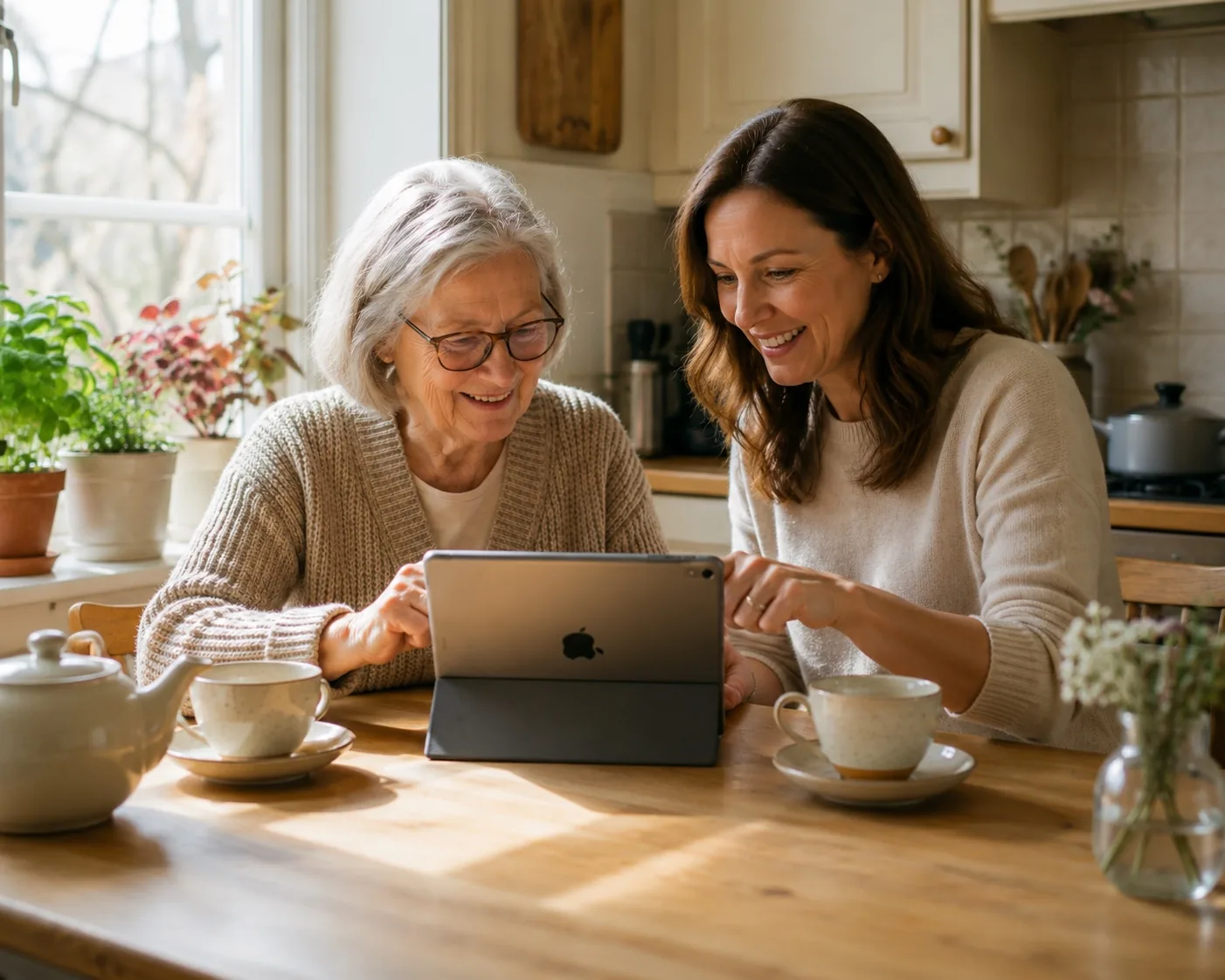
Tellby brings together the work I want to do more of: finding a human problem worth solving, giving a product a clear purpose and carrying that purpose through to the smallest interaction.
It shows my judgement as a founder and product designer through concrete choices: separating organiser and storyteller needs, designing for voice, making sharing deliberate and building the tools needed to question the product’s behaviour.
Tellby is live and still evolving. This is an account of the product and the decisions behind it; I’m not claiming measured adoption or a proven family outcome here. The next evidence that matters is whether families find it comfortable to use and valuable enough to return to.