Their clock, not yours
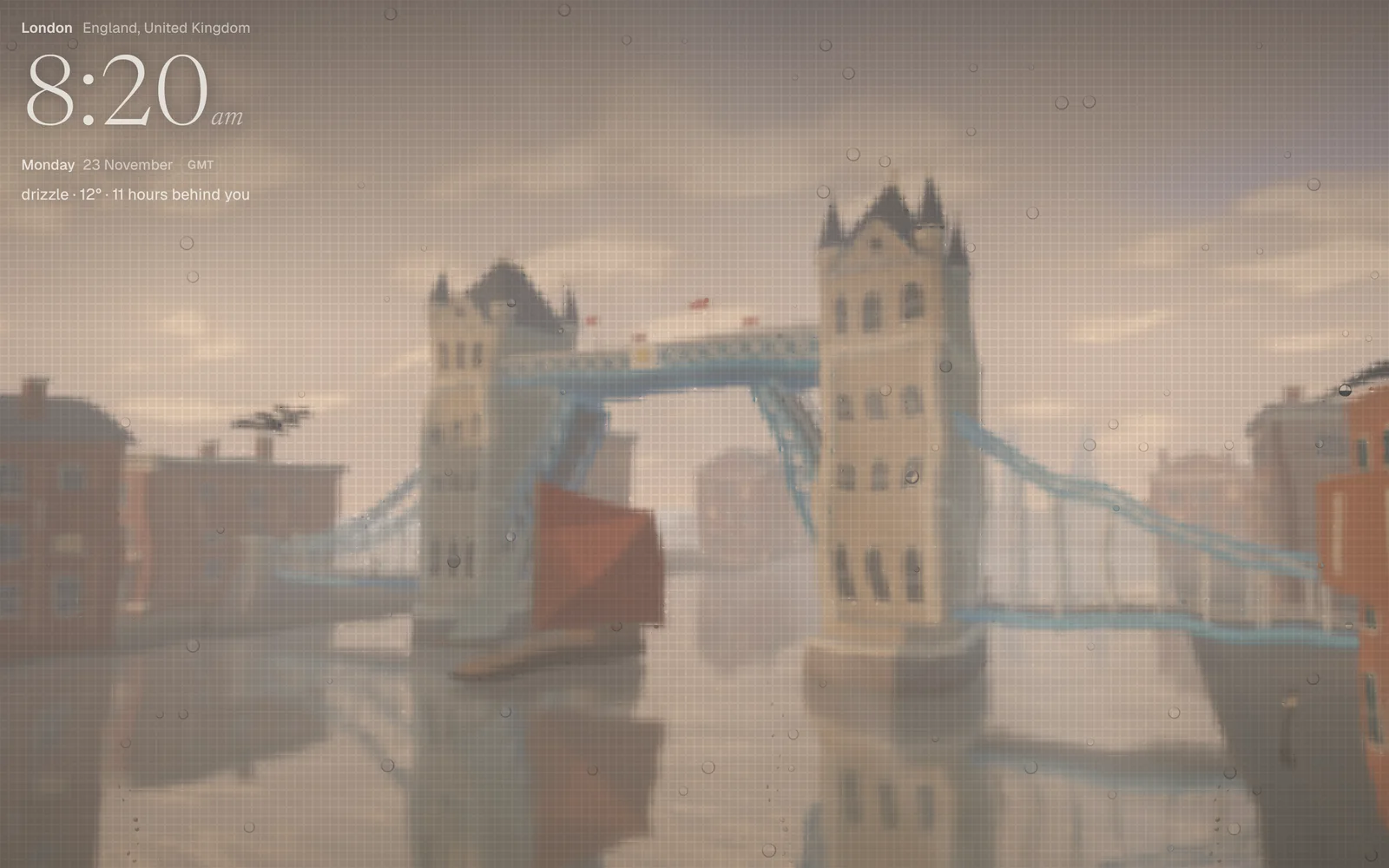
A reference point is only useful if it’s right. Every time on the glass comes from the place’s IANA timezone, such as Europe/London, and nothing reads the timezone of the device you’re holding. The sun’s position comes from the place’s latitude and longitude and the moment in UTC, so dawn reaches the window when it reaches them.
The line under the clock says it the way a person would: “9 hours behind you”, “3½ hours ahead, tomorrow there”. The zone is the abbreviation people there use, such as BST or AEDT, or GMT+8 where there isn’t a common one. Browsers only know those names in some English locales, so the app asks eight of them in turn.
A fixed offset per place would have been simpler, and wrong for half the year. In October the gap between Melbourne and London changes twice in three weeks. Drag through the month to watch it move.
London
12:00pm
Tuesday 29 SeptemberBST
9 hours behind you
sun 35° up
Kuala Lumpur
7:00pm
Tuesday 29 SeptemberGMT+8
2 hours behind you
sun 1° up
Kolkata
4:30pm
Tuesday 29 SeptemberIST
4½ hours behind you
sun 12° up
Let the frost do the work
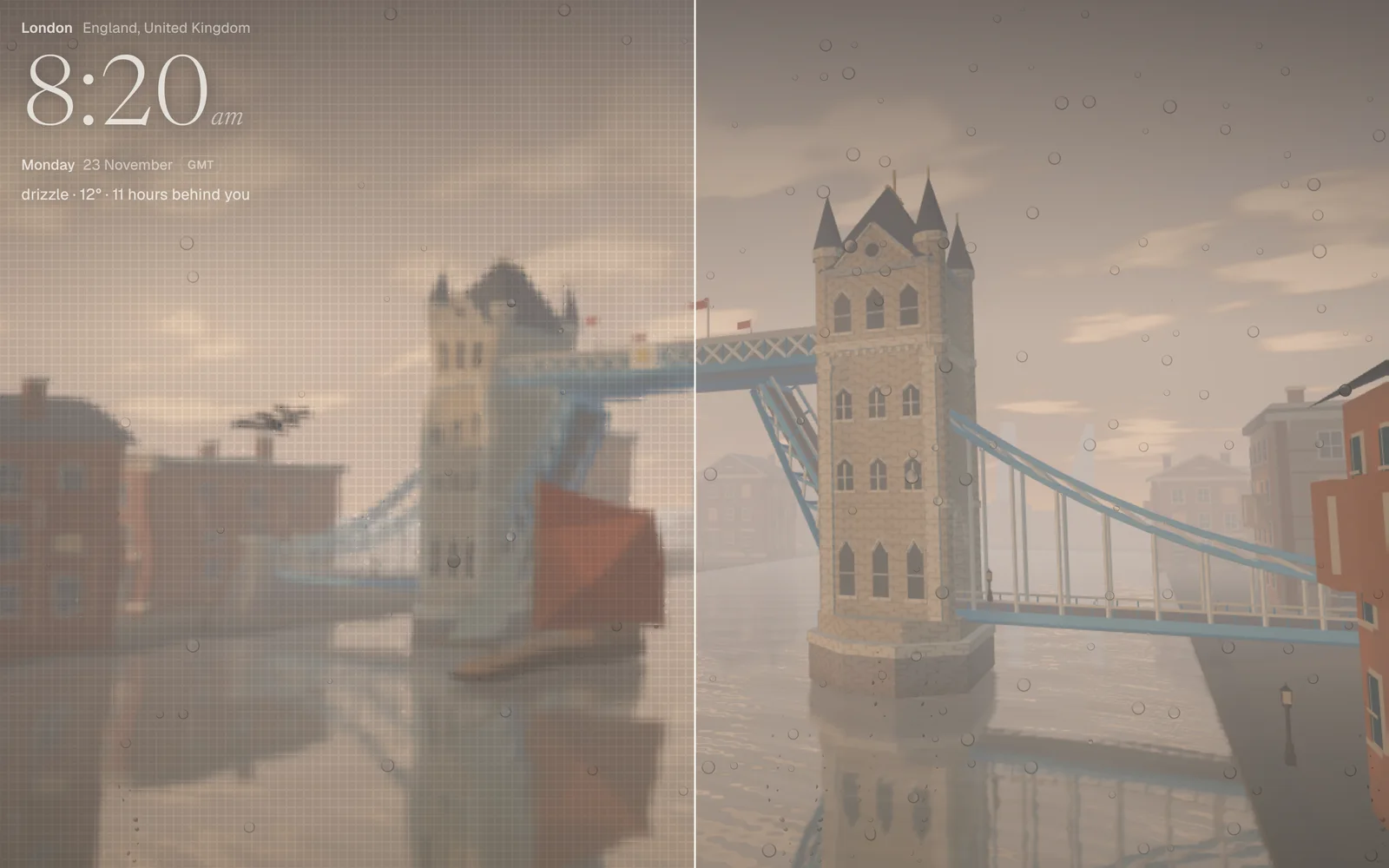
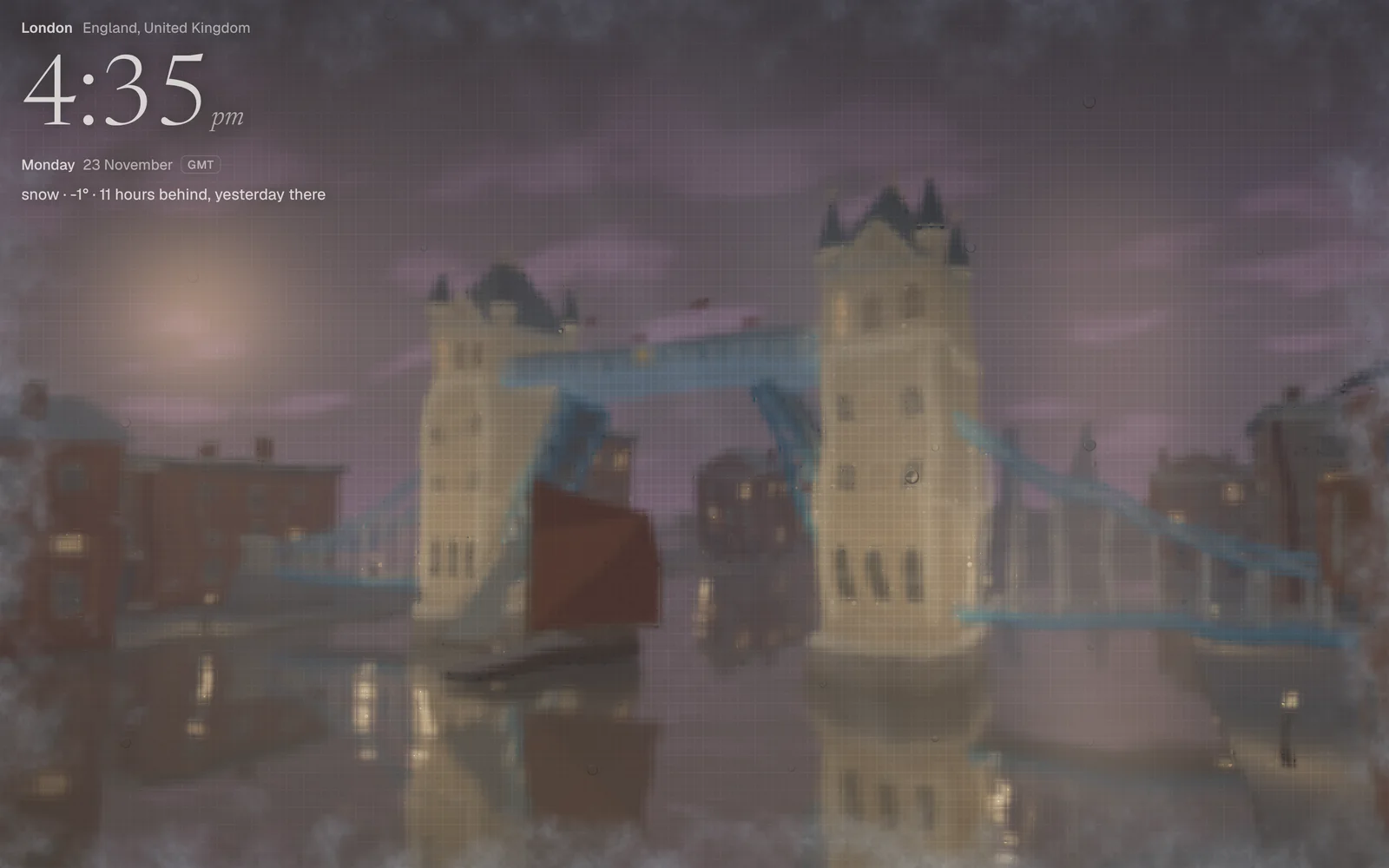
The glass is a shader pass over a rendered 3D scene. It samples the view through a grid of small lenses, then adds condensation, frost in the cold and rain on the pane. The scene behind it never has to be sharp.
That set the budget for every landmark. Tower Bridge, St Kilda Pier and the Petronas Towers are low-poly models with a few lit windows, because through frosted glass the silhouette and the light carry the view.
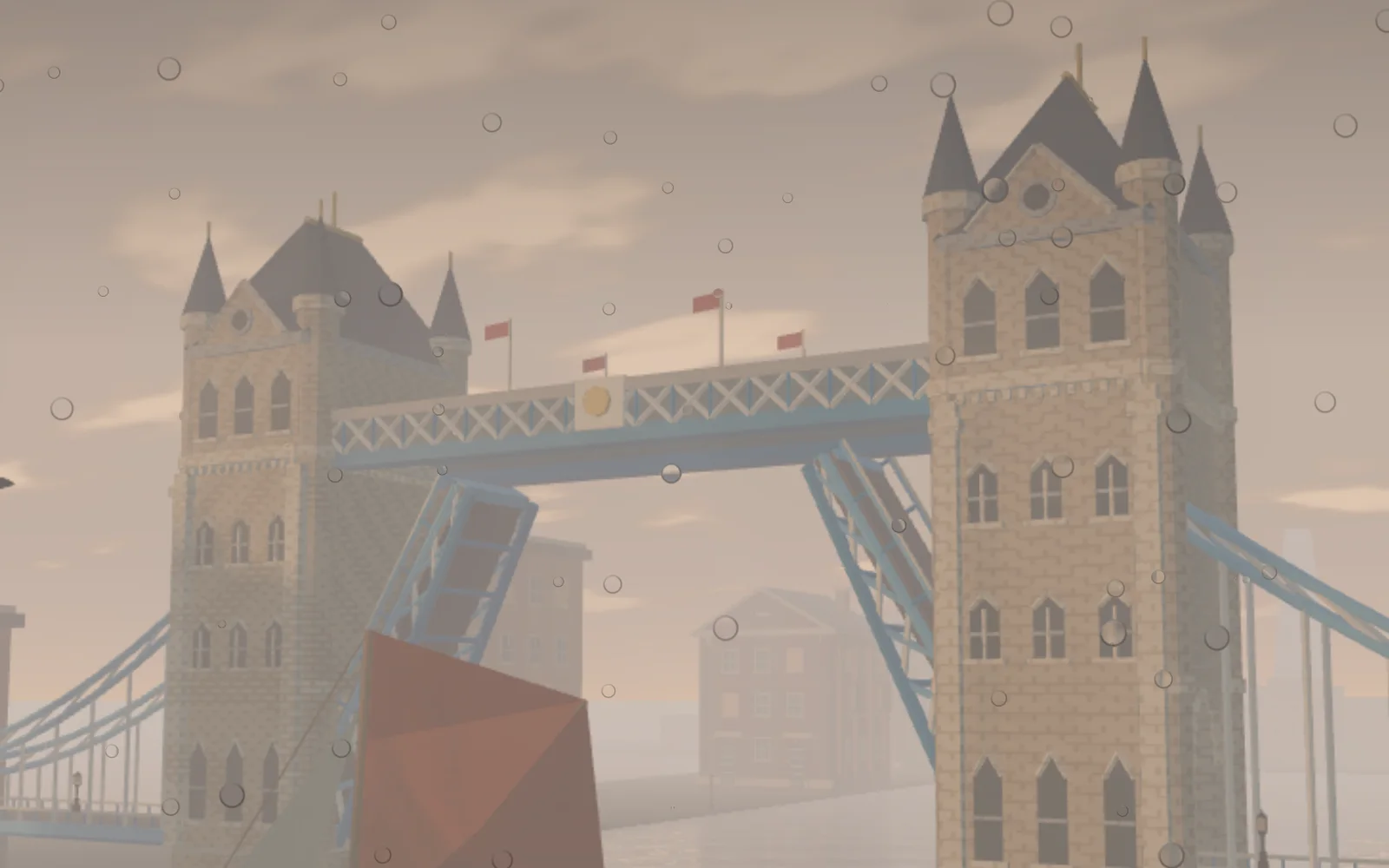
The exception is when someone clears the glass. Press and drag to wipe the condensation, or tap the eye to clear it all, and the landmark is what they judge. So the detail went there: coursed stone on the towers, satin paint on the girders, and a railing and lamps close to the window for the view to slide past as you tilt.
Anywhere without a landmark falls back to a generic window: a small garden that faces the equator, so the sun still crosses the middle of the view. Every place gets its real weather, light and time from day one, and a new landmark is one scene registered by distance. More cities can be added over time without changing anything else.
The weather has to reach everything
Weather was the other half of what people looked up, so it had to read at a glance, not as a label. Live conditions come from Open-Meteo, one request for every saved place, refreshed every 10 minutes. A new place opens on its own weather. A change in the same place rolls in, the way weather does.
A grey sky over dry, sunlit stone looks like a filter, not like rain. So drizzle thickens the air with distance and greys out the far bank first. Shadows soften under cloud, gusts roughen the river and stretch its reflections, and from dusk the street lamps light the stone around them and lay warm paths on the water.
Let something happen, rarely
Far Window is meant to stay open for hours, so the controls fade after seven seconds and most of the time nothing happens. Then, now and again, something does. Tower Bridge lifts for a Thames sailing barge, and a red bus crosses once the road is down again. A plane can pass over any window, and a shooting star can cross a clear night.
These moments come from seeded time slots, one encounter per slot, so the same moment looks the same on every load. With reduced motion on, the scene’s clock stops and none of them play.
Start somewhere real, without asking
The first window is where you are, worked out from your IP address. On Vercel the edge already knows the city, so no third party sees the address. The browser’s location prompt would be more precise, but it asks for trust before showing anything, and a window only needs the city.
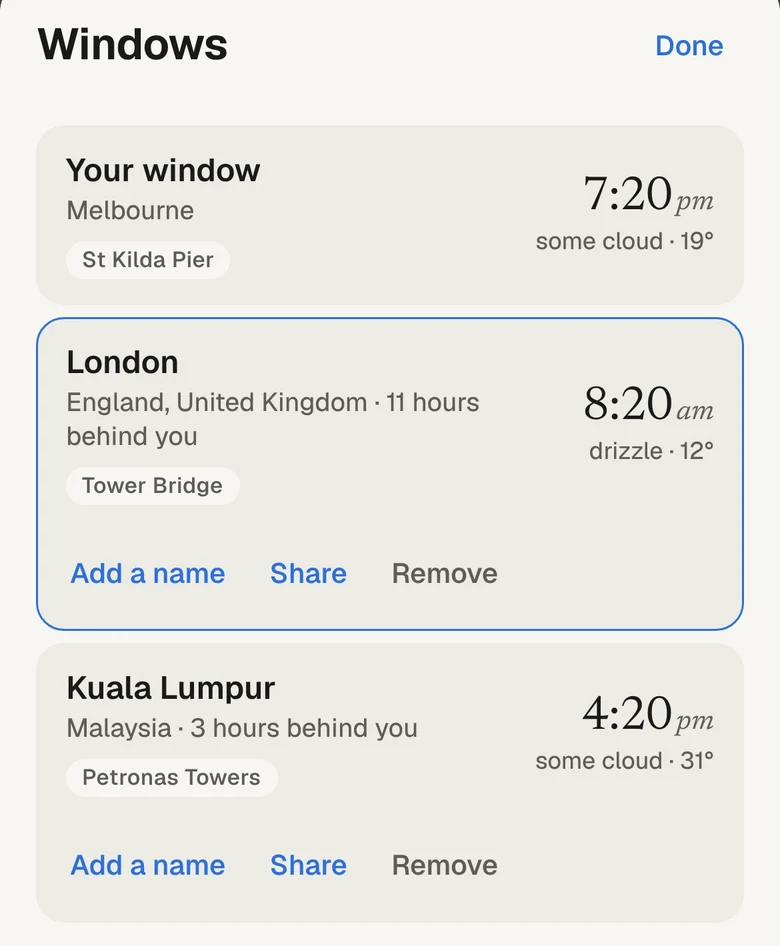
After that, you add the places you care about and, if you like, who’s there: “Mum”, “Sam’s team”. They’re saved on your device. Share makes a link that opens straight onto that window for someone else and adds it to theirs.
On a phone it installs as a full-screen web app. You switch windows with a sideways swipe across the clock and tilt the phone to look around.
What it doesn’t know yet
It shows the weather now, not later. There are three landmark scenes so far: London, Melbourne and Kuala Lumpur. Everywhere else gets the generic window until its own scene is built. Places live on one device, so a family can’t share a set of windows yet.
The research showed the habit. It didn’t test this answer to it. I haven’t yet put Far Window in front of people before a real call to see whether a glance replaces the look-up. That’s the next study. So far it’s a personal product, built over a few days in November 2026.
A world clock gives you the number. What people were reaching for before a call was a sense of the other person’s day, and that turned out to need a whole scene.