The brief: make tactics visible
Television punditry had a stale grammar: two people on a sofa, a replay, a telestrator scribble.
ESPN wanted pundits to analyse tactics and formations in a full 3D environment — something that could show why a back four collapsed, not just point at where.
The risk was obvious. Put unfamiliar technology between a pundit and a live broadcast and you get hesitation on screen. Put it between the analysis and the viewer and you get confusion. Whatever we built had to feel obvious within one second of seeing it.
Familiarity is the interface
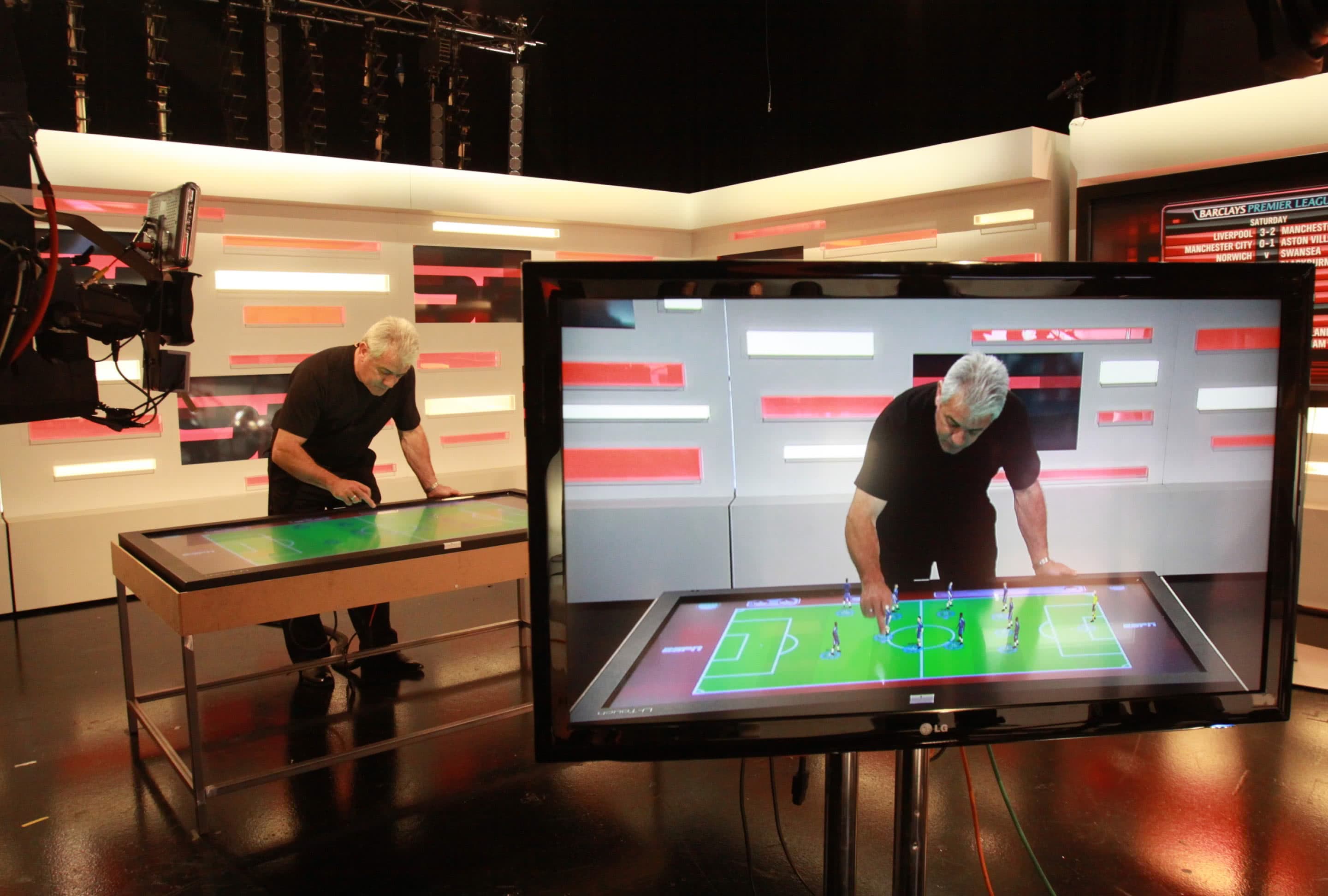
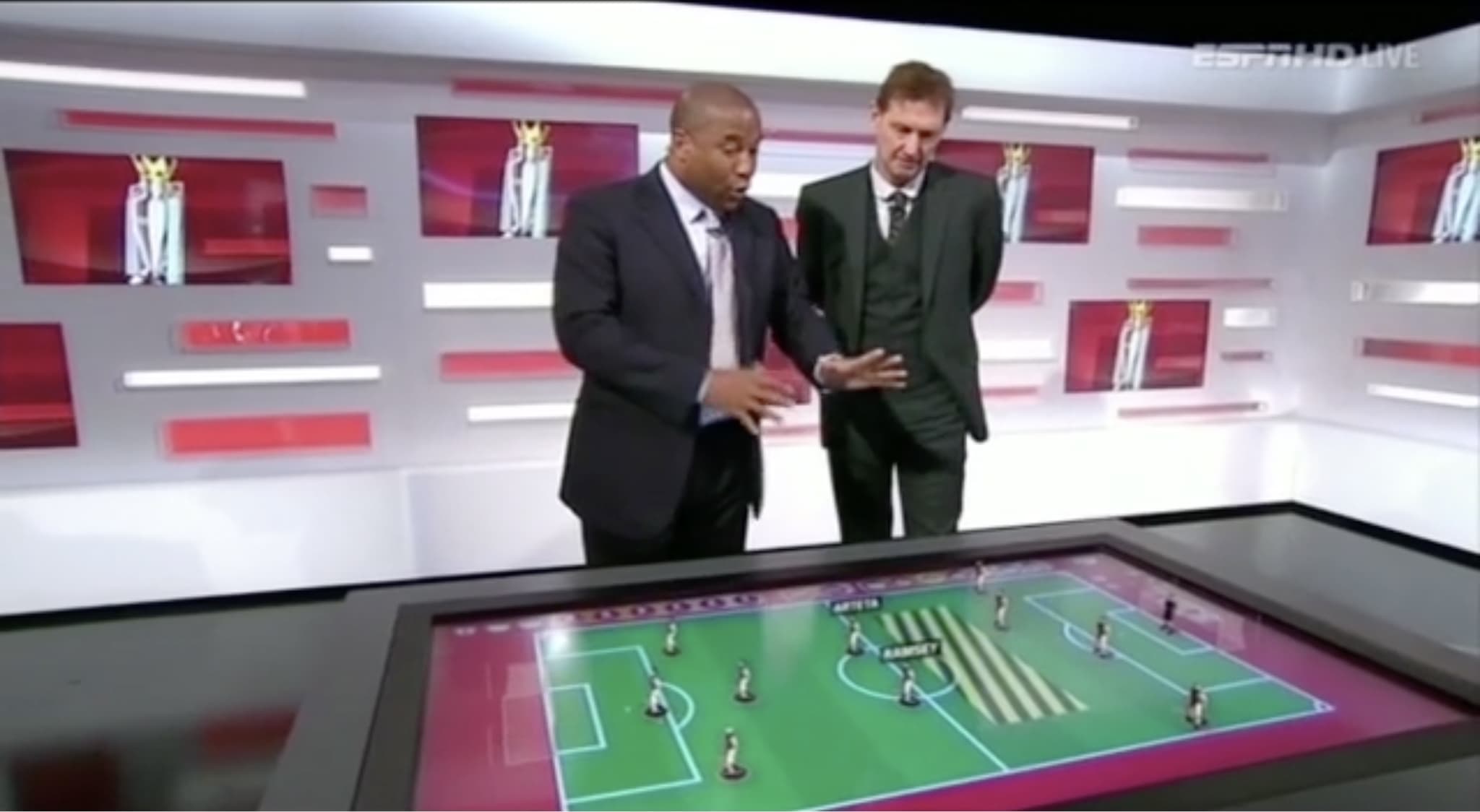
The answer was a horizontal touchscreen table with animated, moveable football players standing on its surface.
Pundits could move freely around the table, push augmented graphics across the pitch, and discuss tactics — all while facing the viewer. They could highlight areas of the pitch or single a player out by throwing him off the table, revealing a pre-recorded avatar of the player standing in the studio with detailed statistics.
None of this needed explaining, because the metaphor did the work. A table-football layout. Subbuteo-like player figures. Viewers had spent childhoods around both. The AR was radical; the mental model was forty years old.
A weekly production rhythm
Broadcast does not wait for design iterations. Every Saturday was a hard deadline with 1.5 million people on the other side of it.
So the craft ran on a weekly cycle: from Thursday we created the graphics, rehearsed with the pundits, tested, and fine-tuned — an intensely collaborative process to have everything perfect for Saturday's matches.
That rhythm shaped the design as much as any concept work. Anything too fragile for a Thursday rehearsal never made it to air.
What a second season proved
After the success of the first season's augmented graphics, ESPN commissioned a second, and we developed the system further for 2012.
The lesson I carry from this project into every interface since: when you introduce a genuinely new interaction, spend your novelty budget on the capability, not the metaphor. Borrow the metaphor from something your audience already loves.
The pundits looked comfortable. The viewers never had to think. That is what innovation looks like when it works.