The best content was hidden
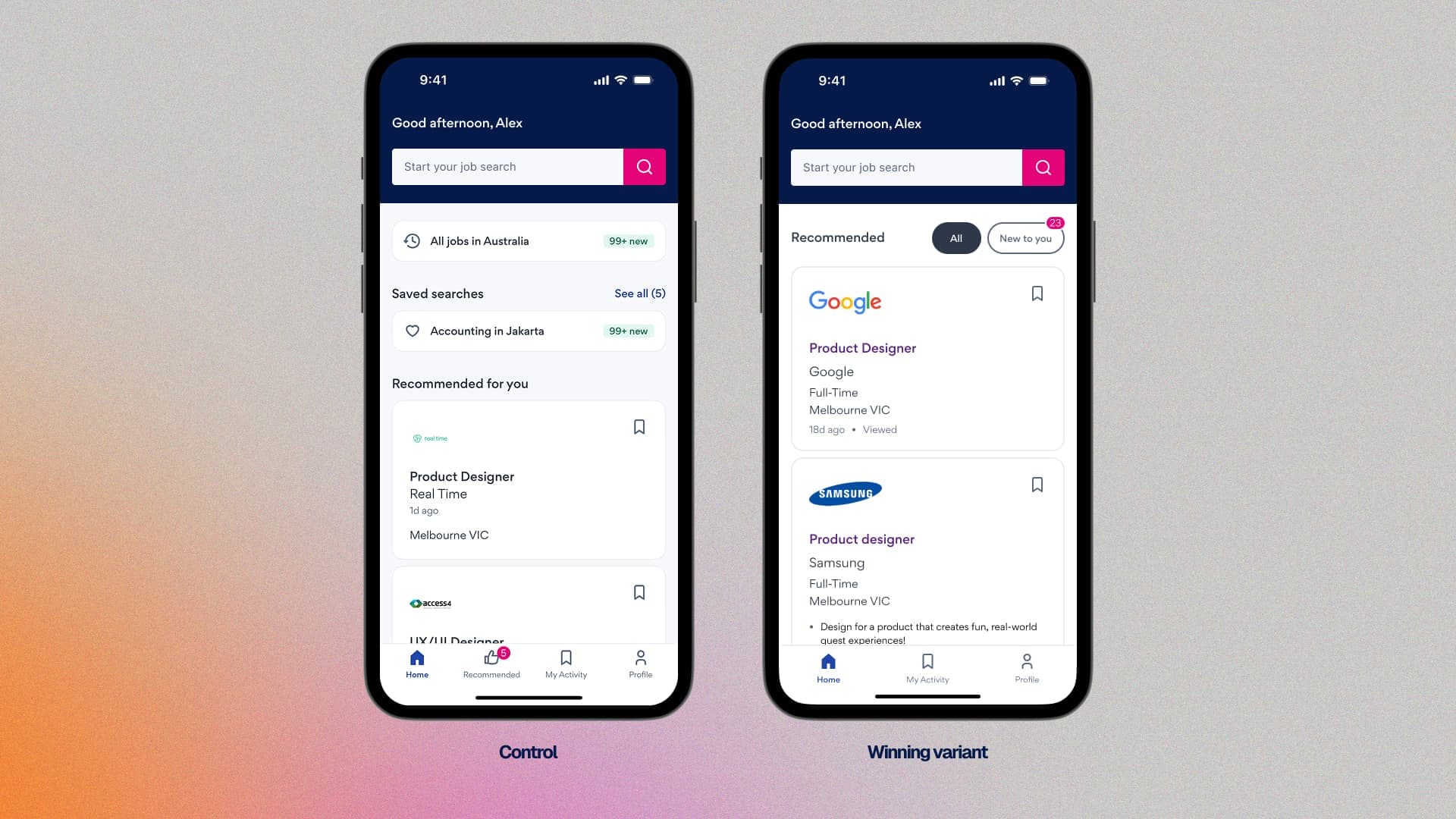
SEEK's mobile experience split job discovery across two tabs: Home, for search, and Recommendations.
The structure looked tidy on an architecture diagram and failed in hands. Four in five users never opened Recommendations, so the most personalised jobs SEEK could offer went unseen. Meanwhile Home — where everyone spent their time — lacked relevance and visual engagement.
Two tabs, each doing half a job. The vision became one feed doing a whole one: a dynamic, personalised Career Feed merging utility and discovery into a single scrollable entry point.
Merge, don't promote
The safe move would have been promoting the Recommendations tab — badges, onboarding tooltips, a louder icon. We had evidence that wouldn't work: the red badge notification was already the loud option, and 80% of users still didn't come.
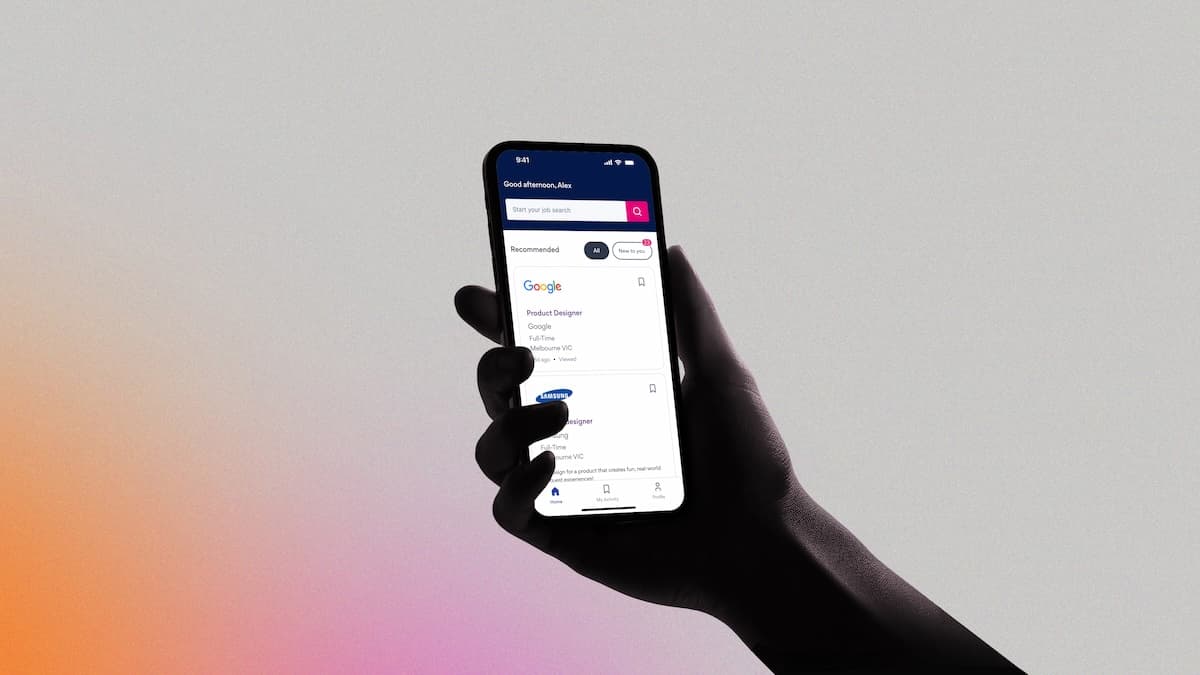
So we removed the tab entirely and placed personalised recommendations directly into the Home feed. Relevant jobs surfaced earlier, and discovery stopped being a place you go and became a thing that happens where you already are.
Working in a cross-functional trio with iOS and Android engineers, PMs, and researchers, I rearchitected the navigation and homepage IA around that single decision.
Designing agency into a feed
A merged feed risks feeling like something done to the user. The detail work was about giving control back:
- A custom toggle lets users switch between All and New recommendations — replacing the red badge with a control that says what it does.
- Saved and recent searches moved inside the search component itself, freeing visual space without losing function.
- Visual nudges — badges, scroll-to-top after long scrolls — came back in response to direct usability feedback.
The new card structure also did quiet groundwork: it supports job-level badges like Expiring soon and Early applicant without another redesign.
What moved
Application starts per unique visitor rose 31%. Engagement per visitor rose 26%. The marketplace saw a 4% lift.
Those numbers took months of friction to earn — technical blockers, user confusion, legacy IA — and daily collaboration across personalisation, mobile development, and product analytics.
The transferable lesson: before you invest in making a feature smarter, check whether anyone can find it. Distribution inside your own product is still distribution, and the cheapest relevance gain is often a structural one.